home · discussion
Practice & physiology
Caffeine and pranayama — does the order matter?
A field note from teaching rooms in Mysore, Goa and Ulan-Ude on whether you should sip before *nāḍī śodhana* or wait until the breath has settled — and what the tea itself has to say about timing.
Every winter I spend a few weeks moving between two very different rooms. One is a small śālā on the outskirts of Mysore, where the first practitioners arrive before five and the air still smells of jasmine from the night before. The other is a wooden meditation hall outside Ulan-Ude in Buryatia, where the windows are sealed against minus thirty and the kettle is the loudest object in the building. In both rooms the same question gets asked, in slightly different accents — should I drink tea before pranayama, or after?
The honest answer is that the question is older than the question-askers realise. Tibetan and Mongolian monastics have been drinking compressed dark tea before long sessions of breath retention for centuries, and the Mysore tradition has its own quiet relationship with strong south Indian filter coffee at four in the morning. What is genuinely new is the assumption that caffeine and breath work are somehow in opposition — that one is stimulating, the other regulating, and therefore the two cancel each other out.
From the inside of a practice, that framing falls apart quickly. Shēng Pǔ’ěr (生普洱) from a 2014 Bulang spring cake does not behave in the body the way a double espresso does, even when the measured caffeine content is comparable. The vector of arrival matters. The qi of the leaf matters. The thing you do after drinking matters most of all. What I want to do in this thread is lay out what teachers in three different places — Mysore, Goa, and Buryatia — actually recommend, and where their recommendations agree, disagree, and contradict the lab numbers we have access to on tea.doctor and the longer aging notes on puerh.app.
This is not a medical post. It is a practitioner’s notebook, written from inside the rooms where these decisions get made every morning.
What the Mysore teachers actually say
In the Krishnamacharya lineage rooms I have visited around Lakshmipuram and Gokulam, the working rule from senior teachers — I will not name them here out of courtesy — is that anything stimulating goes before āsana, never before seated prānāyāma. The reasoning is somatic, not chemical. Nāḍī śodhana and bhrāmarī require a baseline of nervous-system quiet that strong caffeine actively erodes for the first twenty to forty minutes after ingestion. If you must drink, drink early — sixty to ninety minutes before the seated portion of the practice — and drink something whose caffeine releases slowly.
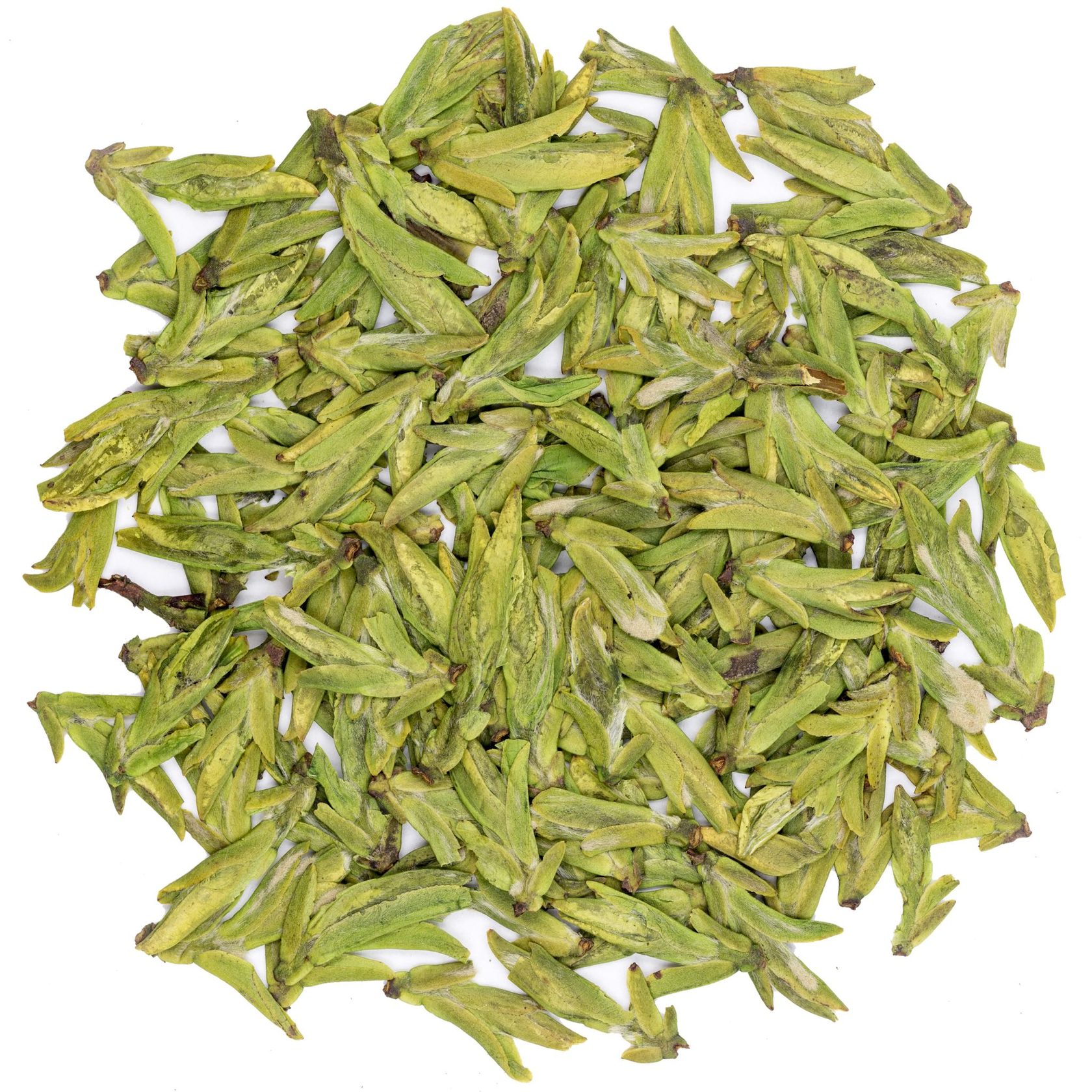
This is where Chinese tea becomes interesting. The l-theanine to caffeine ratio in a well-made Lóng Jǐng (龙井) from West Lake is roughly 1.5 to 1, and the release curve over a three-infusion gōngfū session is noticeably gentler than any single shot of espresso. Several Mysore teachers I respect have switched, over the last decade, from filter coffee to either a light Yunnan green or a low-roast Taiwanese oolong precisely because the arousal curve no longer collides with seated breath work at six-thirty. The recommendation that emerges is not abstinence. It is matching the kinetics of the leaf to the structure of the morning.
Goa, kapālabhāti, and the question of an empty stomach
Goa is a different ecosystem. The teachers I sit with around Mandrem and Arambol run shorter, more dynamic morning sessions, often opening with kapālabhāti — rapid diaphragmatic exhalations — before any seated work. Here the consensus flips. Drinking anything at all, tea included, in the thirty minutes before kapālabhāti is discouraged. The mechanical reason is simple. Liquid in the upper stomach during rapid abdominal pumping is uncomfortable at best and emetic at worst.
What several teachers do recommend is a small cup of warm, low-caffeine tea immediately after the breath work concludes, before the seated meditation that closes the practice. Bái Háo Yín Zhēn (白毫银针) from Fuding is a common choice in the studios that have developed a relationship with Chen Hui Yi’s distribution work in Guangdong. The tea is warming without being activating, and the silver-needle buds carry enough sweetness to settle a stomach that has just been worked hard. For practitioners who want to understand why white tea sits this way in the body, the chemistry write-ups on tea.doctor go into more detail than I can here, and the sourcing notes on shop.thetea.app explain the specific Fuding lots we have been recommending.
The Buryat dark tea tradition
My own training is rooted further north. In the Buryat Buddhist tradition the morning beverage before long sessions of tonglen or breath-counting is süütei tsai — milk tea built on heavily compressed Hunanese dark tea, sometimes a Fú Zhuān (茯砖) brick with its characteristic jīn huā (金花) yellow flowering. The combination of fat, salt, and slowly-released caffeine produces a remarkably stable arousal curve that holds for two to three hours of seated work without spikes.
What my teachers told me, and what twenty years of personal practice has confirmed, is that the relevant variable is not caffeine per se but the rate at which the molecule reaches the brainstem. Wò Duī (渥堆) processing — the pile-fermentation that turns young leaves into shú pǔ’ěr — produces a similar slow-release character through a different chemical route. Both teas seem to support rather than disrupt long breath retentions, which is why I keep returning to them in cold-season practice. The detailed aging and fermentation notes I have collected on this are kept on puerh.app, and the wider Buryat tea-as-practice context is something we explore in the cohort programmes on tea.school.
What the measured effects actually show
Anecdote is most of what we have, but not all of what we have. The small body of published work on caffeine and respiratory rate suggests that moderate doses — 80 to 120 mg, roughly one strong gōngfū session — increase resting respiratory rate by one to three breaths per minute for the first hour. That is not nothing. If your prānāyāma practice is built around slowing the breath to four cycles per minute, an elevated baseline is working against you.
The more interesting finding, less often cited, is that the effect is dose-dependent and inverts above a certain threshold. Heavy caffeine intake produces shallow, rapid breathing. Moderate intake, especially when accompanied by l-theanine, produces a slight deepening of the breath with no significant rate change. This matches what practitioners report when they switch from coffee to tea — not less alertness, but a different quality of alertness, one that does not fight the breath. Cross-reference this with the cardiovascular notes on tea.fitness and the morning-energy material on tea.energy, and a reasonably coherent picture emerges.
A practical ordering for most mornings
If I were forced to write a single recommendation for a generally healthy adult practitioner with a daily morning practice, it would look something like this. Wake. Warm water with a slice of ginger. Twenty to thirty minutes of āsana or gentle movement. A short, three-infusion gōngfū session with a tea matched to the season — a Henan oolong in autumn, a Fuding white in summer, a Hunanese dark tea in deep winter. Wait fifteen minutes. Then sit for prānāyāma and meditation.
The order matters because the body needs time to absorb and distribute, and the breath work needs a settled gut and a calm nervous system to do its job. Drinking during seated practice is, in my experience, almost always a mistake. Drinking immediately before it is usually a mistake. Drinking ninety minutes before, with full attention paid to the leaf, is something else entirely — it becomes part of the practice rather than a precondition for it. The cohort discussions on tea.community have been useful for refining this further, and the upcoming retreats listed on tea.events go into the seasonal variations in more depth.
Open questions for the thread
Three questions I would like the room to take up. First — for those of you with a daily seated practice, have you noticed a measurable difference between coffee and tea in how the breath behaves twenty minutes in? Second — does anyone here practice in a tradition that explicitly forbids caffeine before breath work, and if so what is the stated reasoning? Third — for the shú pǔ’ěr drinkers, do you find the wò duī fermented teas sit differently in long retentions than young shēng of comparable age?