home · discussion
Aged pu'er · evening practice
Aged sheng for evening restoratives
Notes from twenty years of brewing aged *Shēng Pǔ'ěr* (生普洱) for the slow hours after sundown — leaf weights, water discipline, and where the long-rest tradition still holds.
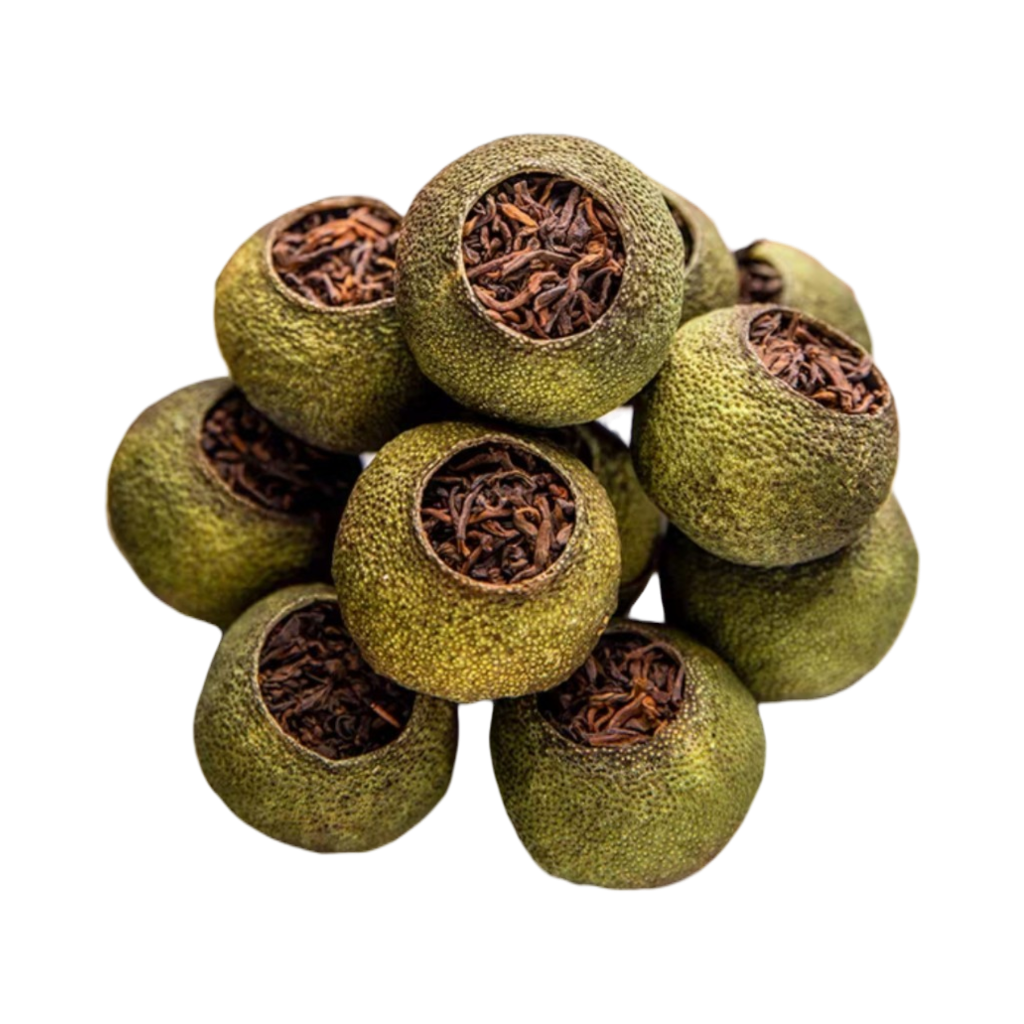
There is a particular kind of tea that belongs to the last hour of the day — to the space between the closing of uttanasana and the unrolling of the bolster for savāsana. For me, after years of working across the Russia–Mongolia corridor and tasting through warehouse stocks in Kunming, Guangzhou and Ulan-Ude, that tea is aged Shēng Pǔ’ěr (生普洱). Not the bright, astringent two-year cakes that crack open the morning, but cakes that have rested fifteen, twenty, sometimes thirty years in humid southern storage or the dry cold of Buryatia.
The question that arrives in my inbox most often, especially from yin and restorative teachers, is deceptively simple: how do you brew aged sheng so it accompanies a slow practice rather than disrupting it. The answer is not a single ratio or temperature. It is a relationship between the cake’s storage history, the season you are drinking it in, the length of the practice that follows, and — honestly — the quality of your water.
This thread is an attempt to gather what I have learned, and to invite others who brew for evening sessions to push back. I am writing from the Kyakhta side of the old tea road, where dark teas have been part of the household evening for four or five generations. The framing here is tamasic in the older Ayurvedic sense — grounding, settling, drawing energy downward — but I want to keep this practical. Leaf weight, kettle temperature, vessel choice, source.
If you want to see how this conversation overlaps with shu and heicha aging, there is a longer technical thread building on puerh.app, and the sourcing notes I reference below are pulled from current stock on shop.puerh.app. I’ll point to specific cakes by year and producer where it is useful, not as a recommendation but so readers can calibrate against tea they may actually have access to.
Why aged sheng for the evening, not shou
The common assumption is that Shú Pǔ’ěr (熟普洱) — wet-piled, dark, earthy — is the evening tea, and young sheng is for daylight. In practice, after a decade of brewing both for restorative classes in studios across Ulan-Ude and Saint Petersburg, I find the opposite holds for the last hour before sleep. Shu, especially under fifteen years from the Wò Duī (渥堆) pile, carries a residual warmth and a thickness in the chest that can feel activating in a body that is already trying to descend. Aged sheng — properly aged, not merely old — has moved past its bitterness, past the huí gān (回甘) sharpness of youth, and into a quality the older Menghai workers used to call chén yùn (陈韵): a settled resonance.
The specific cake I keep returning to for evening work is a 2003 Xiaguan tuocha from dry Kunming storage. Twenty-two years old now, the leaf has gone from green-brown to a deep tobacco color, the liquor pours clear amber, and the qì sits low in the body rather than rising to the head. For practitioners moving into yin postures or yoga nidrā, that downward settling is exactly what you want. Shu, by contrast, I save for the cold pre-dawn hours of prānāyāma — different work, different tea.
Leaf ratio and water — what I actually use
For evening brewing I work lighter than I would in the morning. The temptation with aged sheng is to push it — 8g in a 100ml gaiwan, near-boiling water, long steeps. That gives you a powerful cup, but it is not the cup you want before lying down. My evening ratio is 5g to 110ml in a thin-walled porcelain gàiwǎn (盖碗), water at roughly 92°C, never boiling.
The reason for the slightly cooler water is twofold. First, well-aged sheng releases its compounds slowly and forgivingly; you do not need 100°C to coax it open. Second, lower temperature emphasizes the chén xiāng (陈香) — the aged-wood, camphor, old-library notes — rather than pulling forward any residual tannin that might still be hiding in the leaf. Rinse once, briefly, maybe four seconds. Then short infusions: 8, 10, 12, 15, 20 seconds, extending gently.
Water matters more than people admit. I use a low-mineral spring water, around 50–80 ppm total dissolved solids. In Buryatia I draw from a specific well outside Ivolginsk; in city practice I use bottled Volvic or its equivalent. Hard municipal water flattens aged sheng into something muddy and disappointing — the equipment notes on tea.equipment go into the chemistry if you want to read further.
Sourcing — the long-rest tradition
The hardest part of this practice is finding tea that has actually been aged, rather than tea that has merely sat. There is a difference, and the difference is storage discipline.
The Hong Kong tradition — wet, warm, controlled humidity around 75% — produces the classic camphor-medicinal aged profile beloved in Cantonese teahouses. The Kunming dry tradition, which I lean toward, produces a cleaner, more floral aged character that suits evening practice particularly well. The Buryat tradition, less written about, involves cold dry storage in wooden granaries; the aging is slower but the qì that results is remarkable — a friend in Kyakhta has a 1998 brick that has rested in cedar for twenty-seven years and brews like settled river stone.
For practitioners new to aged sheng, I would not start at the thirty-year mark. The 2007–2010 vintages, now fifteen to eighteen years rested, offer the most honest entry — old enough to have lost their aggression, young enough to still be affordable. The team behind shop.thetea.app and the broader Teamotea constellation has been documenting the 2008 Yiwu and 2009 Bulang cakes worth tracking; I trust their cataloguing because I helped write the storage notes.
Pairing with the practice itself
A cup of aged sheng twenty minutes before a restorative session sits differently in the body than the same cup taken during the practice. I have experimented both ways for years, including in workshops co-taught with Fang Ting in Henan, and my current position is this: brew the first three infusions before the practice begins, drink them slowly during a seated prānāyāma opening — nāḍī śodhana works particularly well — then leave the gaiwan covered. After savāsana, return to the same leaves for two or three more infusions, longer steeps, lower attention. The tea has rested with you. There is something honest about that.
For yin sequences specifically — long-held floor postures, fascia work — the grounding quality of properly aged sheng pairs with the inward focus the practice asks for. I would avoid it before any vigorous vinyāsa or backbending work; save that for the morning Mí Lán Xiāng (蜜兰香) oolongs Chen Hui Yi writes about in the morning thread.
What to avoid
A few honest cautions, from cups I have spoiled. Do not brew aged sheng in a Yixing pot that has held shu or heavily roasted oolong — the clay holds those notes and will muddy the aged character. Dedicate a thin pot or simply use porcelain. Do not over-rinse; a single short rinse is enough, and many older cakes need no rinse at all. Do not chase strength in the late infusions by raising the temperature dramatically — better to extend the steep time and let the leaf give what it has left. And do not drink an unfamiliar aged cake for the first time before bed. Sit with it on a free afternoon first, learn how it speaks to your particular body, and only then bring it into the evening rotation.
Open questions for the thread
Three things I want to hear from the rest of you. First, what is the oldest sheng you have brewed before evening practice, and how did the qì settle in your body — high, low, central. Second, has anyone here worked with Buryat or other cold-dry-aged cakes, and how does the profile differ from what you know from Kunming or Hong Kong storage. Third, for teachers reading this — do you serve aged sheng to students before yoga nidrā, or do you keep it for solo home practice only, and why.